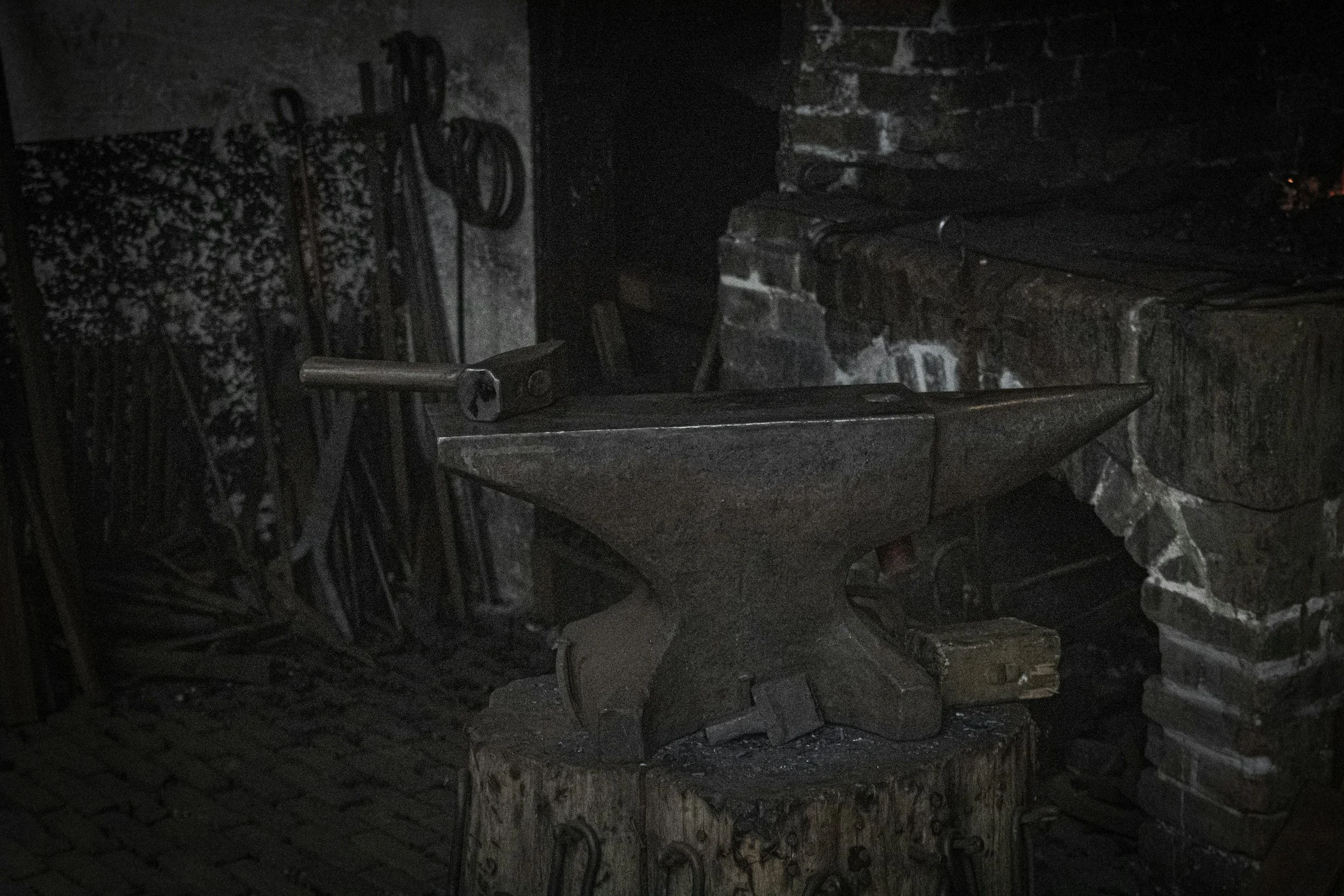
Hand forged Kitchen Cutlery
KNIVES
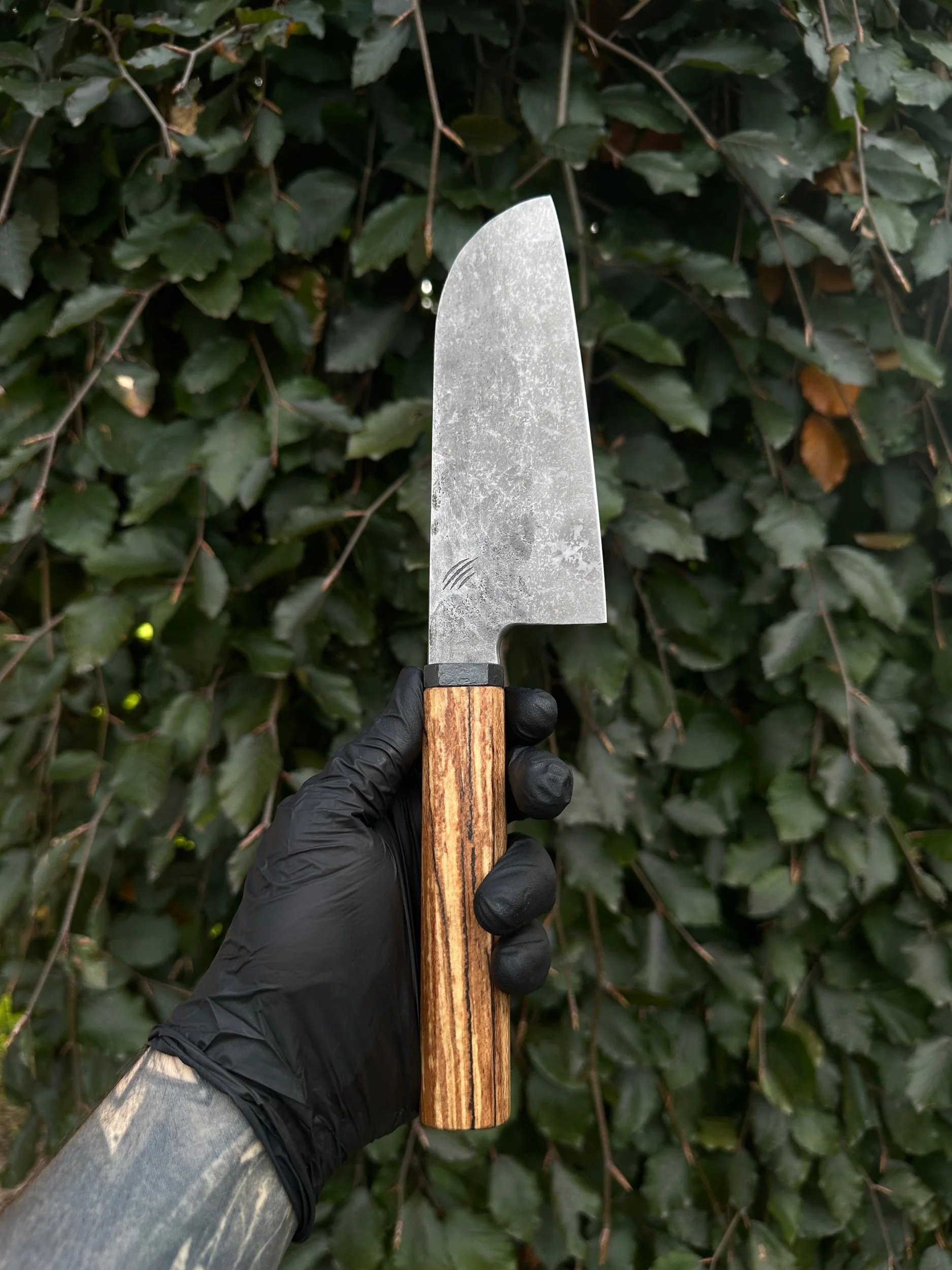
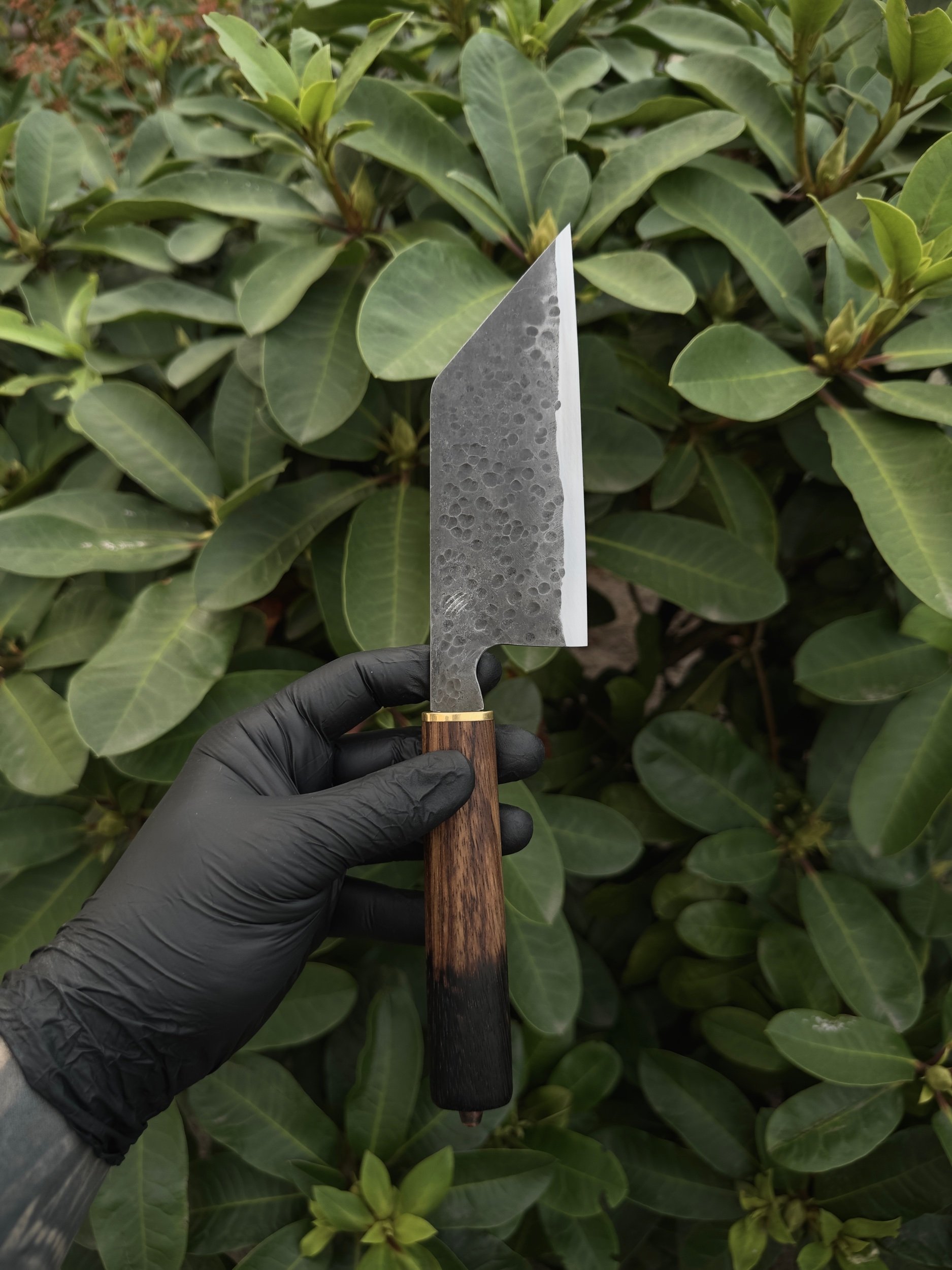
Hand-Forged 145mm Ko-Bunka
I forged this compact 145mm Ko-Bunka to serve as a nimble, highly maneuverable knife for precision prep and smaller kitchen tasks. The blade is hand-forged from 26c3 "Spicy White" high-carbon steel and heat-treated to 63 HRC for exceptional edge retention. It takes an incredibly keen edge and is highly responsive on the stones. Over time, the steel will develop a rich, personal patina from the ingredients you cut.
The knife features a forged geometry with flat, stone-set bevels, making regular whetstone maintenance straightforward. Its signature Bunka reverse-tanto tip gives you a sharp, laser-accurate point for detailed scoring, piercing, or garlic work, while the tall 44mm blade height provides plenty of knuckle clearance at the cutting board.
For the handle, I used a piece of half-charred zebrano wood paired with a solid brass spacer and a decorative forged copper pin
Technical Details
Blade Dimensions: 145 mm length x 44 mm height
Steel Type: 26c3 High-Carbon ("Spicy White") at 63 HRC
Blade Geometry: Forged geometry with stone-set bevels
Handle Materials: Half-charred Zebrano wood, brass spacer, forged copper pin
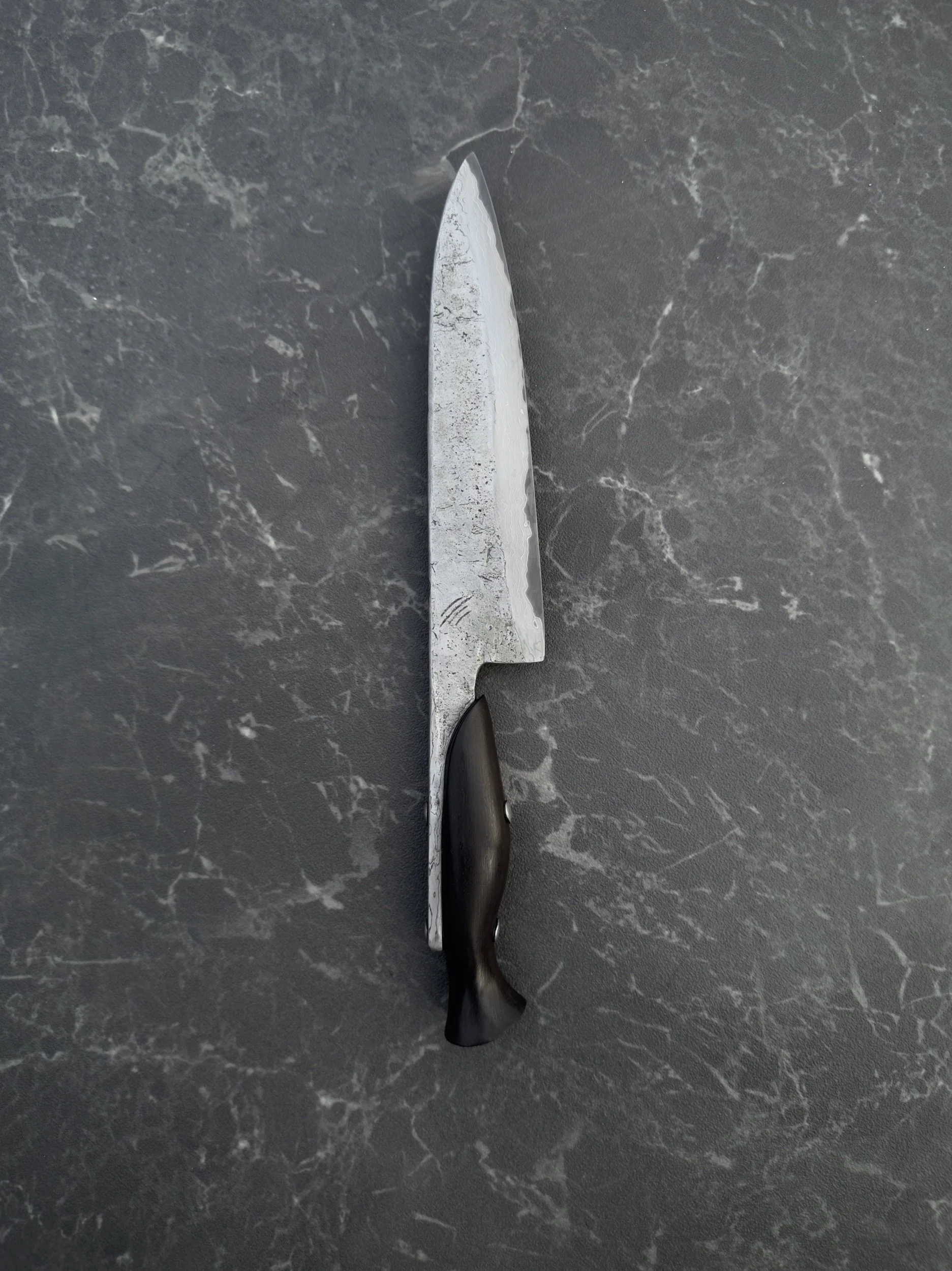
Hand-Forged 225mm Low Bevel Gyuto
This 225mm Gyuto was made to be a true all-around kitchen workhorse for everyday use. The blade is hand-forged from 26c3 "Spicy White" high-carbon steel. I chose this steel because it takes a razor-sharp edge, offers great toughness, and is highly responsive on whetstones. Over time, the carbon steel will react to the ingredients you cut and develop its own unique patina.
I designed this blade with a distinct low bevel geometry and a continuous distal taper. It keeps enough thickness at the spine near the heel for robust cuts, but thins down to a fine, precise tip for delicate detail work. The hand-hammered, forged surface finish looks striking and helps reduce food suction while slicing.
For the handle, a blackened mild steel bolster with a beautiful American walnut handle , The balance point sits slightly forward st the pinch grip , letting the weight of the blade do the heavy lifting during long prep sessions.
Technical Details
Blade dimensions : 225 mm x 57mm
Steel Type: 26c3 High-Carbon ("Spicy White") Heat treated to 63 HRC
Blade Geometry: Low bevel with distal taper ( 6mm at heel to under 1 mm at the tip
Bolster Material: Blackened mild steel
Handle Material: American Walnut
Tank & Steel – Leviathan 310
The Leviathan 310 is built as a statement performance knife for serious kitchen work.
Designed for high-volume prep and demanding ingredients, this long gyuto combines powerful stiffness at the heel with a highly refined, precise tip through an aggressive distal taper.
Forged from tough 80CrV2 high-carbon steel and heat treated to approximately 62 HRC at the edge, the blade offers exceptional cutting bite, edge stability and durability. The hand-ground geometry is optimized for efficient food separation and confident push or draw cutting across a wide range of products.
A subtle hand-finished kasumi surface with visible hamon gives the blade a raw, forged character while maintaining a clean and functional aesthetic. The stabilized curly birch hardwood handle provides a secure grip and visual depth, completing the knife’s brutal yet refined presence.
This piece reflects the Tank & Steel philosophy: uncompromising performance, honest high quality materials and purposeful design.
Specifications
• Steel: 80CrV2 high-carbon steel
Edge hardness: approx. 62 HRC
Construction: mono-steel with differential hardening (visible hamon)
Finish: hand-applied kasumi satin
Handle: stabilized Karelian Curly Birch
Cutting edge length: 310 mm
Overall length: approx. 450 mm
Spine thickness: 4 mm at heel → distal taper to approx. 0.7–0.8 mm near tip
Weight: 322 g
Grind: hand-ground performance geometry
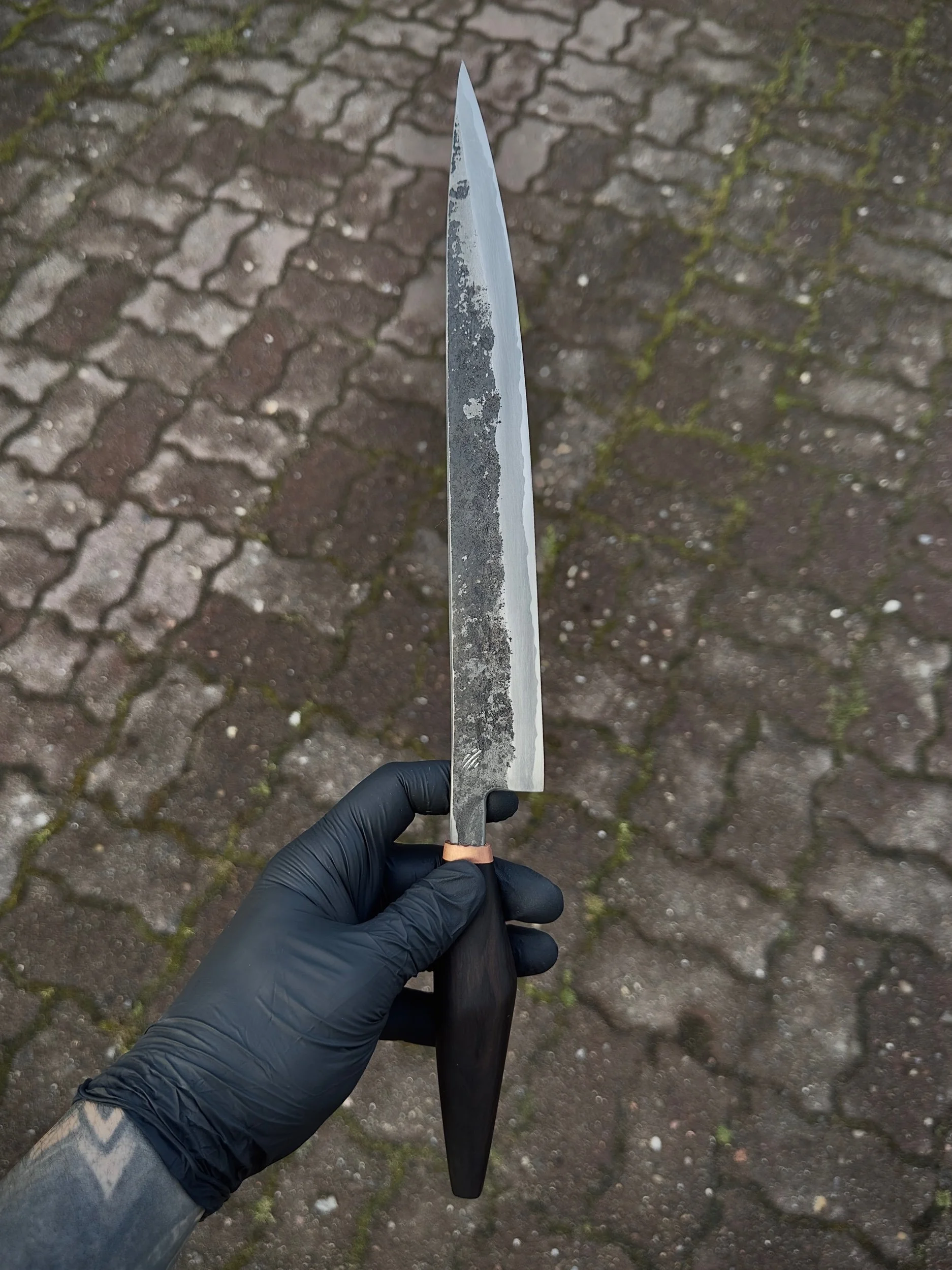
265 mm san mai Sujihiki
shirogami # 2 core / Mild clad
kasumi inspired finish
Ebony handle and copper spacer
distal taper
convex edge
From forge
to finish
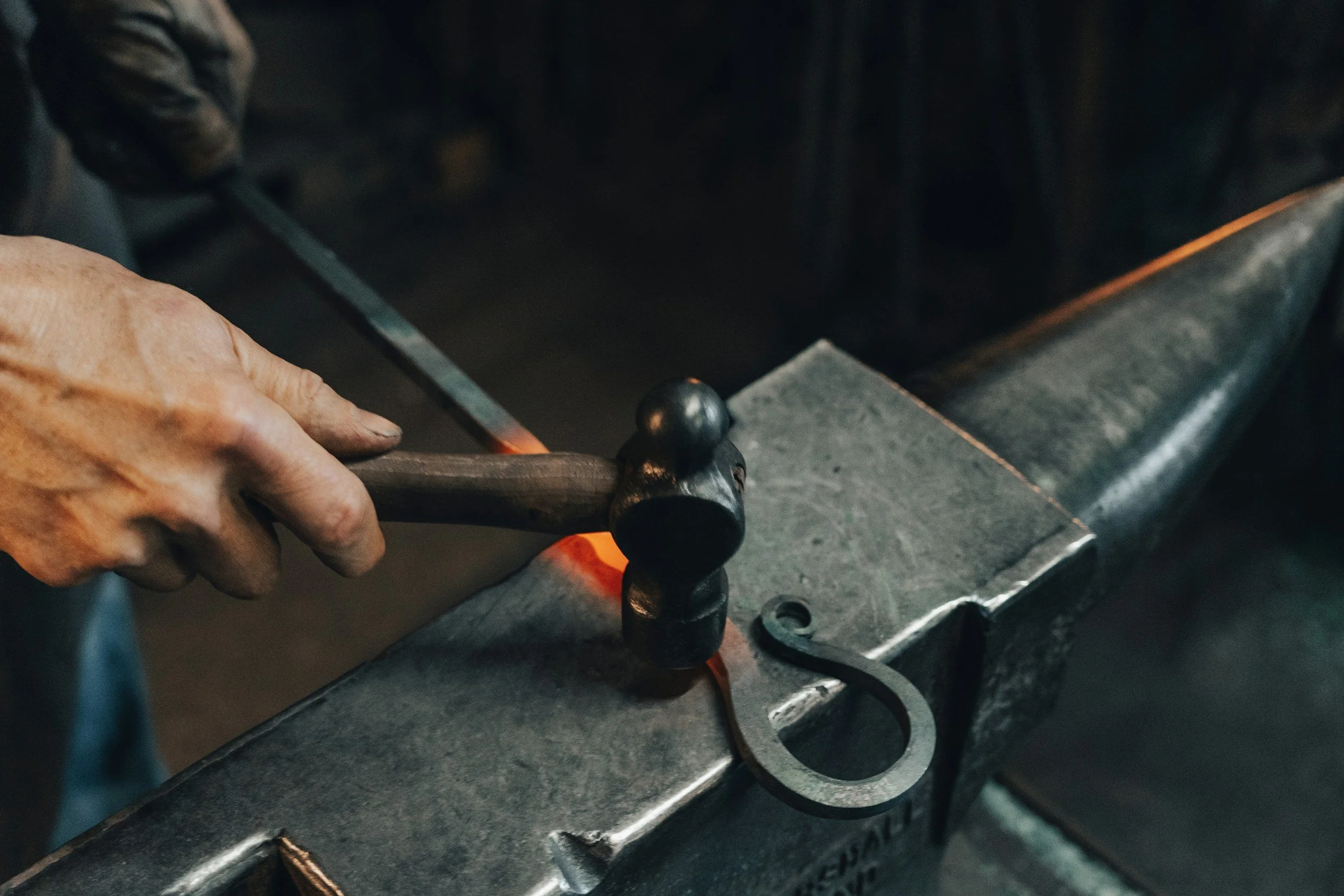
Every piece is created entirely by hand — from the first heating with the induction forge to the final pass of sandpaper. Using modern machinery and age old techniques inspired by traditional blacksmithing.